
The East African Crude Oil Pipeline (EACOP) Ltd. has launched a campaign to prevent Gender-
Based Violence and Harassment (GBVH) and address Sexual and Reproductive Health (SRHR)
risks, reinforcing its commitment to safeguarding the wellbeing of communities along the
pipeline route.

Together with its implementing partner, Health Promotion International (HPI), EACOP recently
conducted a Gender-Based Violence and SRHR study across five districts in Uganda. The findings
confirmed that GBV slows progress and is largely driven by poverty, cultural norms, and practices
such as polygamy, with women and children being the most affected.
Building on these insights, the campaign seeks to improve knowledge and attitudes, foster safe
and inclusive workplaces and communities, strengthen reporting and referral pathways, and
empower local leaders and peer champions to drive sustainable change.
As part of the launch, EACOP rolled out a series of community-centered activities designed to
combine education, dialogue, and service delivery. These included:
• Community Theatre Performances: Using edutainment and real-life scenarios to spark
conversations around GBV, SRHR, and community safety norms.
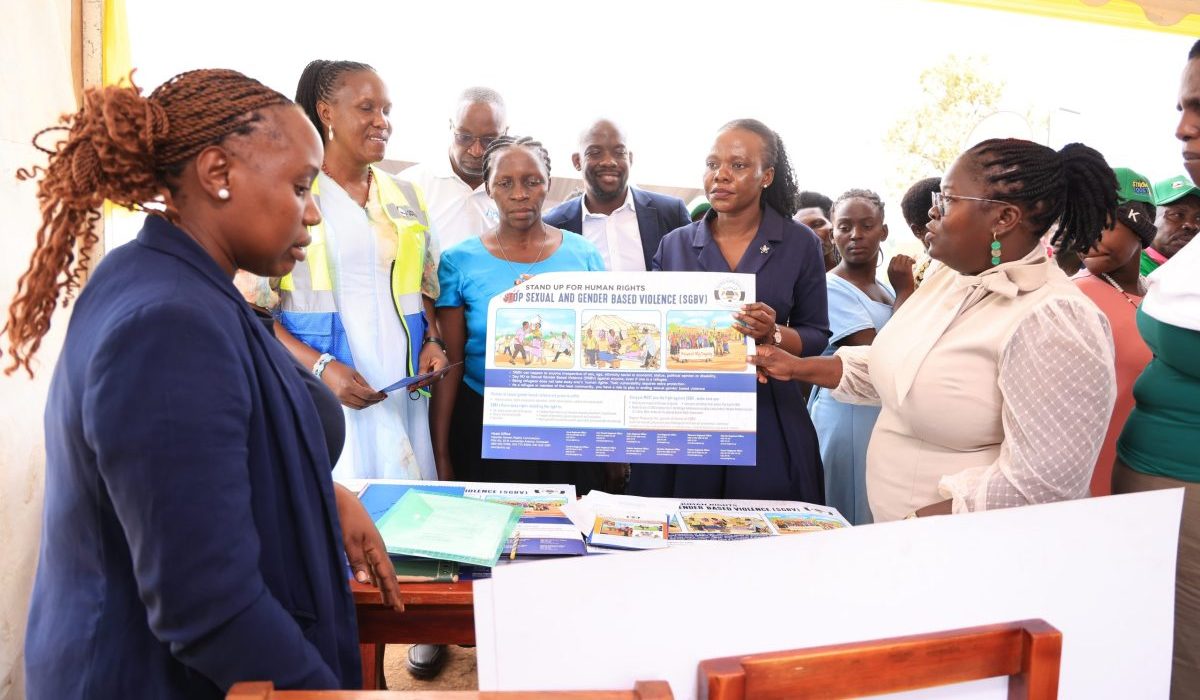
• IEC Materials Dissemination: Posters and flyers in Runyoro, Runyankole, and English to
raise awareness and spread key messages widely.
• Mobile Health Services Booths: Offering onsite counselling and SRHR services through
local health providers. The services provided included vitals checks (blood pressure,
stethoscope, etc.), Hepatitis B screening, UTIs screening and treatment, HIV testing,
condom distribution, family planning services, malaria screening, TB screening, and
diabetes screening.
• Dialogue and Counselling Sessions: Facilitating safe spaces for communities to openly
discuss GBV and SRHR issues.
2
• Gender Based Violence Legal Support and Referrals: Providing guidance and referral
pathways for survivors to access justice and professional support.
The campaign reinforces EACOP’s key messages: that gender-based violence is a violation of
human rights and workplace policy, that everyone has the right to access SRHR services and
information, that respect, safety, and consent are non-negotiable, and that incidents must be
reported early and safely through designated channels.
Speaking at the launch, EACOP Social Performance Manager, Rosie Birungi emphasized the
company’s commitment, stating:
“This campaign is a strategic intervention to build safe, informed, and empowered workplaces
and communities. Through strong partnerships and robust stakeholder engagement, we are
catalyzing positive social change and ensuring that all project-affected persons—regardless of
gender or status—are protected and benefit equitably from the project.”
The campaign directly contributes to the United Nations Sustainable Development Goals,
particularly SDG 5 on Gender Equality and SDG 3 on Good Health and Well-being, while
supporting Uganda’s National Development Plan III (NDPIII) 2020–2025, which prioritizes health,
safety, and human capital development.
The launch event brought together government officials, district leaders, civil society partners,
and community representatives, underscoring broad support for collective action against
Gender-Based Violence and for advancing gender equality in project-affected communities.
– THE END –
The East African Crude Oil Pipeline is a 1,443km crude oil export infrastructure that will
transport Uganda’s crude oil from Kabaale – Hoima in Uganda to the Chongoleani
peninsula near Tanga in Tanzania for export to the international market. This major export
system includes 1,443 km (296 km in Uganda and 1147km in Tanzania) of insulated and
buried 24” inch pipeline, 6 pumping stations, two pressure reduction stations and a marine
export terminal in Tanzania.
Following the Final Investment Decision (FID) that was taken on the 1st of February 2022,
East African Crude Oil Pipeline (EACOP) Ltd. on 15th February concluded the formation
of the company that will construct and operate the pipeline.EACOP Ltd is a special purpose company, governed by its Shareholders Agreement in
which TotalEnergies (62%), Uganda National Oil Company (UNOC – 15%), Tanzania
Petroleum Development Corporation (TPDC – 15%) and CNOOC (8%) are shareholders.
